Family craft ideas for mixed-age participation work best when one shared project offers separate roles for sorting, painting, cutting, fastening, and design rather than requiring everyone to perform the same task. Choose open-ended projects such as a cardboard town, fabric banner, or nature collage so younger children can place large pieces while older participants handle precise tools and structural decisions. Prepare safe material stations, assign jobs by demonstrated ability, and allow role changes when attention or confidence drops. A successful session produces one connected creation without expecting identical skills, pace, or finished contributions from every family member.
Choose Projects That Divide Into Meaningful Roles
A mixed-age project needs parallel entry points, not a single sequence that every participant must complete. A preschooler may enjoy arranging large shapes for ten minutes, while an older child may want to measure a frame, refine details, and solve construction problems. When the activity depends on uniform cutting, careful copying, or waiting for one tool, those differences create bottlenecks. Projects built from independent components let each person contribute at an appropriate level and then combine the pieces into one result.
Scale matters as much as subject. A large wall hanging, tabletop neighborhood, or set of decorated containers gives several hands physical room to work. A small template shared by four people encourages crowding and correction. Open-ended designs also reduce comparison: a collage leaf does not need to resemble the leaf beside it, whereas matching folded figures can make differences in dexterity conspicuous. The goal is coordinated variety rather than identical output.
Before choosing an activity, identify its smallest useful jobs. A cardboard town can involve sorting boxes, covering surfaces, drawing windows, cutting doors, constructing roofs, and arranging streets. Those jobs all support the same scene, but they demand different levels of precision. An adult can make difficult openings without becoming the project’s primary designer. An older child can test whether buildings stand securely, while a younger child chooses colors or attaches pre-cut doors.
A compact selection check prevents many frustrating sessions:
- Shared outcome: Can separate contributions become one recognizable object or display?
- Multiple skill levels: Are there useful jobs that do not require sharp tools or precise hand control?
- Low waiting time: Can at least two people work simultaneously?
- Visible ownership: Will each participant be able to identify a contribution?
- Repairable design: Can misplaced pieces, excess glue, or uneven edges become part of the design?
A common mistake is simplifying the entire activity to suit the youngest person. That often leaves older children disengaged and adults doing decorative busywork. Keep the overall project ambitious, then vary the roles. Families seeking more adaptable formats can use Family craft ideas for mixed-age participation as a planning theme: one creation, several legitimate levels of challenge, and no requirement that every pair of hands work alike.
Nine Shared Projects for Different Ages
The strongest family projects combine modular pieces, forgiving materials, and a clear way to assemble individual contributions. The following options can be expanded or reduced according to table space, available supplies, and the attention span of the youngest participant. They are not age labels; the suggested roles should be adjusted to observed control and experience.
- Cardboard neighborhood: Younger makers can color boxes and place paper windows. Older participants can measure roofs, cut openings, reinforce corners, and plan roads between buildings.
- Family fabric banner: Use a sturdy fabric base with felt, ribbon, fabric scraps, and washable fabric-marking tools. Simple roles include arranging large shapes; advanced roles include tracing letters, tying hanging loops, or sewing details under suitable supervision.
- Nature mosaic: Collect fallen leaves, twigs, seedpods, and stones where collection is permitted. Children can sort by texture or color, while older makers develop a pattern on cardboard and decide how heavier items should be secured.
- Story scroll: Join sheets of sturdy paper into a long scene. One person draws the setting, another adds characters, a beginning writer contributes labels, and an older child links the panels with captions.
- Recycled-material creature: Combine clean cartons, tubes, lids, and paper. Younger participants choose features and colors; older ones solve balance, joints, and support.
- Celebration garland: Each person decorates flags, circles, or leaves that are later threaded or clipped together. Repeating component shapes make the final display coherent without restricting individual designs.
- Air-dry clay garden: Make flowers, insects, stepping stones, or miniature signs. Large hand-formed pieces suit developing fingers, while experienced participants can add textures and construct stable upright forms.
- Family game board: Younger children supply pictures, colors, or simple challenges. Older family members establish a playable route, write concise rules, and test whether turns are fair.
- Collaborative shadow box: Build a layered scene inside a shallow box. Participants create background, middle-ground, and foreground pieces, then experiment with spacing before anything is attached permanently.
Choose a project according to the family’s likely friction point. A garland is useful when participants arrive and leave at different times because every component stands alone. A cardboard structure better suits a group that enjoys solving problems together, but it requires more negotiation and adult monitoring. Clay offers immediate sensory engagement, although drying space and cleanup need advance thought. A game board holds older children’s interest through rule design, yet very young participants may need a separate decorating area while testing occurs.
The weak assumption is that an impressive finished object creates the best experience. Highly prescribed examples often push adults to redraw, reposition, or quietly replace children’s work. A good result should show the family’s different hands. If the components remain connected visually through a limited color palette, repeated shape, or shared theme, differences in technique usually add character rather than disorder.
Match Tools and Tasks to Ability
Tool access should be based on demonstrated control, the material being worked, and active supervision—not age alone. Two children of the same age may have very different experience with scissors, hole punches, needles, or low-temperature glue equipment. Begin with the least hazardous method that can make a sound connection, then introduce more demanding tools only where they add genuine function.
Adhesive choice illustrates the tradeoff. Glue sticks are tidy and manageable for lightweight paper, but they may fail on textured cardboard, wood pieces, or fabric. White craft glue forms stronger bonds on many porous materials, although excess amounts increase drying time and cause paper to buckle. Double-sided tape gives an immediate hold and avoids wet mess, but repositioning is difficult. An adult-operated fastening method may be appropriate for a structural joint, while children control the design and placement decisions.
Set up materials by function rather than giving every participant an identical kit. A low-risk station might contain large paper shapes, washable coloring tools, glue sticks, and blunt modeling tools. A supervised station can hold sharper scissors, a hand punch, strong adhesive, wire, needles, or other tools selected for the particular project. Keep small loose parts away from children who may mouth objects, and check packaging for product-specific age guidance, ventilation needs, skin-contact warnings, and cleanup instructions.
Preparation should remove hazards and delays without removing all meaningful work. Pre-cutting thick cardboard for a young child is sensible; choosing every color and placing every feature is not. Loosening tight lids, protecting the table, trimming dangerous edges, and making one tested joint can keep the session moving. By contrast, presenting fully prepared pieces in numbered piles can turn a shared build into assembly by compliance.
Watch what happens after the first few minutes. An appropriate role produces independent choices and manageable effort. Repeated tool snatching, hidden hands, tearing caused by force, or constant requests for rescue indicate that the task or material needs adjustment. Offer a larger piece, softer material, a stabilizing jig made from scrap cardboard, or a two-person role in which one participant holds while another fastens. Do not frame reassignment as a demotion.
Families comparing Family craft ideas for mixed-age participation should prioritize safe participation over symbolic equality. Fairness does not mean everyone uses the same scissors or adhesive. It means each person has real creative authority within a task they can perform safely and with reasonable independence.
Organize the Session Without Taking Over
A workable session separates planning, making, assembly, and drying so participants are not competing for attention at every moment. Display the base, describe the shared objective in one or two sentences, and show where completed components will go. Avoid demonstrating a polished model unless replication is truly necessary; families often treat an example as the only acceptable answer even when the activity was intended to be open-ended.
Offer bounded choices at the start. “Would you like to make buildings or trees?” is easier to act on than “What do you want to do?” and still preserves ownership. Older children can select a construction responsibility, such as joining sections or checking balance. Adults should take the least visible jobs first: replenishing supplies, managing drying pieces, holding awkward parts, and handling only those cuts or fasteners that require adult control.
For a family with a four-year-old, an eight-year-old, a teenager, and an adult, a shadow-box scene might proceed in parallel. The youngest child colors large background shapes. The eight-year-old makes animals from card. The teenager designs folded supports that place figures at different depths. The adult cuts the box safely and helps test attachment points. During assembly, every maker explains where a piece belongs. That brief discussion keeps the most technically capable participant from becoming the default art director.
Intervention is useful when safety, irreversible damage, or shared-space conflict is involved. It is usually unnecessary when colors clash, edges are uneven, or a child uses a material differently than expected. Ask a functional question before changing anything: “Will this piece need to stand up?” or “Where should the door open?” Questions preserve problem-solving; silent correction communicates that only adult workmanship counts.
Time limits should follow the project’s natural stopping points. A short session can end after individual components are made, with final assembly scheduled later. Trying to force construction, decoration, and cleanup into one sitting often causes adults to rush the last stage. Place wet pieces on labeled scrap paper, photograph the intended arrangement if needed, and store unused components in a shallow container.
Signs of success include participants making decisions without queuing for approval, pieces progressing at different speeds without conflict, and the group being able to explain how contributions connect. Warning signs include one person controlling the central object, younger children receiving only leftover scraps, or older children being assigned permanent helper roles. The remedy is usually structural: create another design area, divide the base into zones, or rotate authority at the next assembly decision. Thoughtful Family craft ideas for mixed-age participation make contribution visible without turning collaboration into enforced sameness.
Frequently Asked Questions
What is the easiest shared project for a wide age range?
A component-based garland is especially adaptable because each person can decorate a separate piece with suitable tools, and the pieces can be joined at the end.
How can toddlers participate without controlling the whole activity?
Give them a defined area, large materials, washable coloring tools, and choices between two or three safe components. Keep small parts and unsuitable adhesives out of reach.
Should older children always help younger children?
No. Offer helping as an occasional role, not an obligation. Older children also need independent design decisions and challenges appropriate to their abilities.
How do you handle family members who finish at different times?
Use optional extension jobs such as adding texture, making labels, testing stability, or arranging completed components. Avoid requiring extra decoration from someone satisfied with their contribution.
What should an adult do when a child makes a visible mistake?
Pause only for danger, structural failure, or damage to another person’s work. Otherwise, ask whether the child wants to adapt, cover, remove, or keep the unexpected result.
Conclusion
Mixed-age making becomes easier when the project is large enough to share, flexible enough to absorb different techniques, and modular enough to prevent tool bottlenecks. Select one connected outcome, identify several worthwhile jobs, and prepare materials according to actual ability rather than assigning rigid age roles. Let adults manage hazards and logistics while children retain decisions about color, placement, character, and form.
For the next session, choose one forgiving format such as a garland, cardboard neighborhood, or layered scene. Prepare only the difficult structural pieces, establish separate material stations, and decide where unfinished work can rest. If one participant begins directing everyone else or another is left with token tasks, change the workflow rather than demanding better cooperation. Shared ownership grows from how the work is divided, not from making every contribution look the same.
Now retrieving an image set.
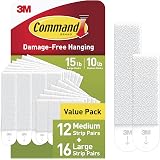
Command 15 & 10 lb Assorted Picture Hanging Strips, 28 Pairs, SIOC | White Picture Hanging Strips, Damage-Free Wall Hangers for Frames, No Tools Required, Ideal for Decorating Apartments, Dorms
$13.57 (as of September 27, 2026 22:43 GMT -04:00 - More infoProduct prices and availability are accurate as of the date/time indicated and are subject to change. Any price and availability information displayed on [relevant Amazon Site(s), as applicable] at the time of purchase will apply to the purchase of this product.)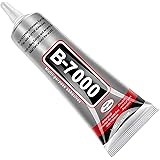
Now retrieving an image set.
B7000 Jewelry Glue for Making, FITTDYHE 1PCS 50ML/1.69 fl oz Clear Adhesive for Rhinestone, Fabric, Multipurpose Super B-7000 for Phone Repair, Nail Art, Wood, Glass, Charms
$5.99 (as of September 27, 2026 22:43 GMT -04:00 - More infoProduct prices and availability are accurate as of the date/time indicated and are subject to change. Any price and availability information displayed on [relevant Amazon Site(s), as applicable] at the time of purchase will apply to the purchase of this product.)
Now retrieving an image set.
Handcraft Blends Peppermint Essential Oil - Huge 4 Fl Oz | Steam Distilled, Premium Grade for Diffuser, Aromatherapy, Skin, Massage, Candle & Soap Making Fragrance
$9.99 (as of September 27, 2026 22:43 GMT -04:00 - More infoProduct prices and availability are accurate as of the date/time indicated and are subject to change. Any price and availability information displayed on [relevant Amazon Site(s), as applicable] at the time of purchase will apply to the purchase of this product.)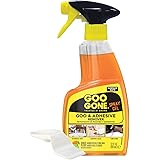
Now retrieving an image set.
Goo Gone Adhesive Remover Spray Gel 12 Oz with Scraper, Surface Safe | Citrus Cleaning Power for Hard Surfaces, Carpet & Fabric, Removes Glue, Stickers, Tape Residue, Grease, Gum & Wax, Drip Free
$17.98 (as of September 27, 2026 22:43 GMT -04:00 - More infoProduct prices and availability are accurate as of the date/time indicated and are subject to change. Any price and availability information displayed on [relevant Amazon Site(s), as applicable] at the time of purchase will apply to the purchase of this product.)
Now retrieving an image set.
Crayola Construction Paper Bulk Pack (480 Sheets) – 10 Assorted Colors, 9x12, Teacher School Supplies & Classroom Must Haves, Card Making Craft Supplies, Art Paper
$12.24 (as of September 27, 2026 22:43 GMT -04:00 - More infoProduct prices and availability are accurate as of the date/time indicated and are subject to change. Any price and availability information displayed on [relevant Amazon Site(s), as applicable] at the time of purchase will apply to the purchase of this product.)
Now retrieving an image set.